Conjectures
Famous math problems, explained from zero, with pictures that move. Pictures first, simple sentences second, symbols last.
Each topic below is a complete guide. It starts with something you already know and walks, one small step at a time, to the edge of what anyone knows. Nothing is hand-waved: every mathematical claim is re-checked by code you can run yourself.
Topics
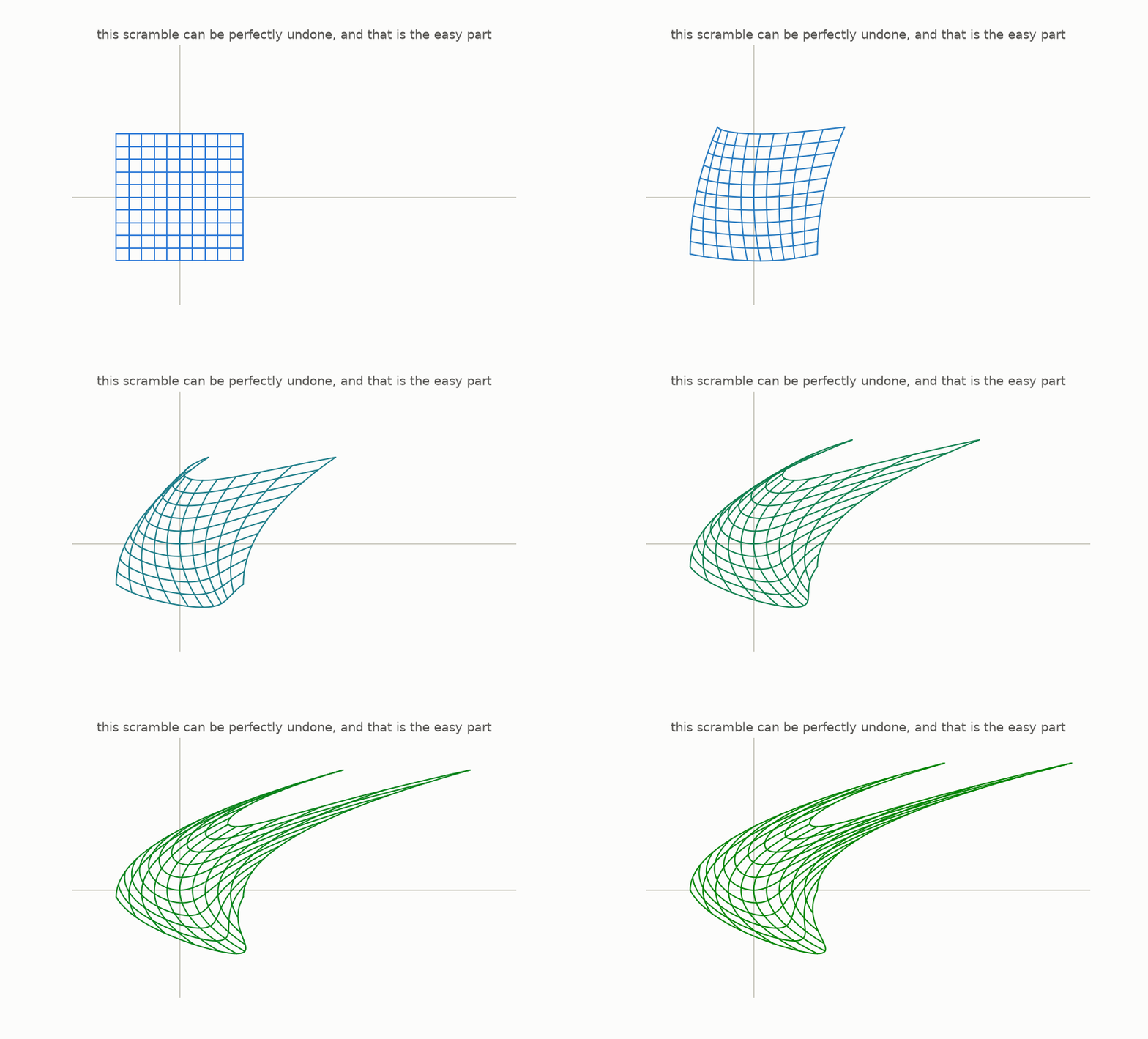
The Jacobian Conjecture
In 1939 Ott-Heinrich Keller asked a question small enough to fit on a postcard, which was whether a polynomial machine that never crushes anything can always be undone. It resisted every proof for 87 years, and collected a famous graveyard of wrong ones. Then, in July 2026, it fell in every dimension except the one where it was born.
13 chapters · read the one-page version, or the chapter-by-chapter version on GitHub
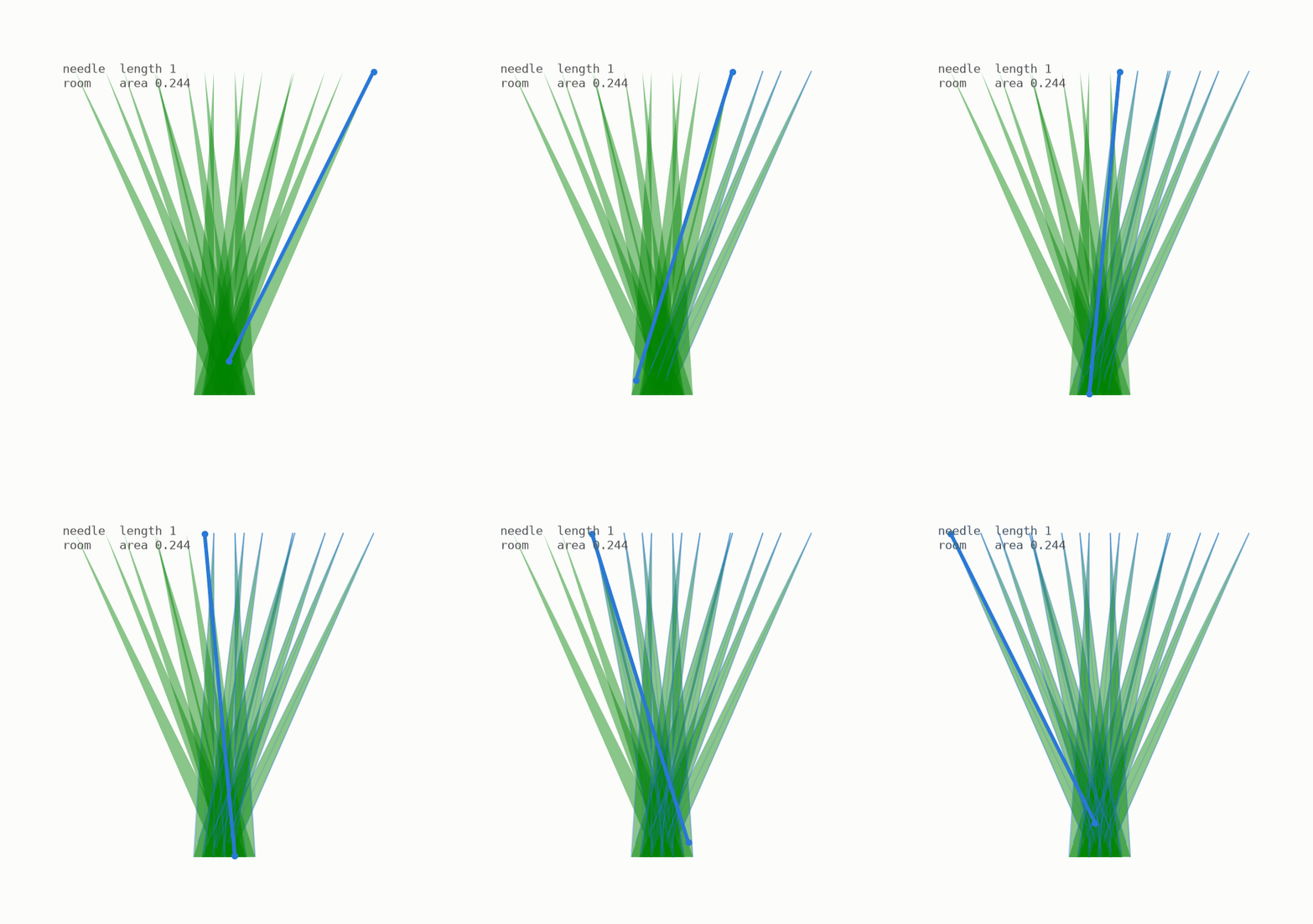
The Kakeya Conjecture
In 1917 Soichi Kakeya asked how small a room has to be if you must turn a needle right around inside it. The answer, two years later, was that there is no smallest room: a needle can turn inside a shape of any size you name, and a close cousin of that shape has area exactly zero. That replaced the question with a harder one, which held up large parts of Fourier analysis for a century, fell in three dimensions in February 2025, and is still open in four and up.
13 chapters · read the one-page version, or the chapter-by-chapter version on GitHub
Sphere Packing, and the Limit of a Method
How densely equal balls can fill space is a question Kepler answered by guess for three dimensions in 1611, and it took until 1998 to prove. In high dimensions nobody knows, so instead people prove that no packing beats a certain figure, using one function that obeys two sign rules. In 2026 the exact strength of that method was determined, which both replaced the best general figure since 1978 and showed that this route can never do better.
13 chapters · 13 simulations embedded in the article, one per chapter, that you can move with your own hands
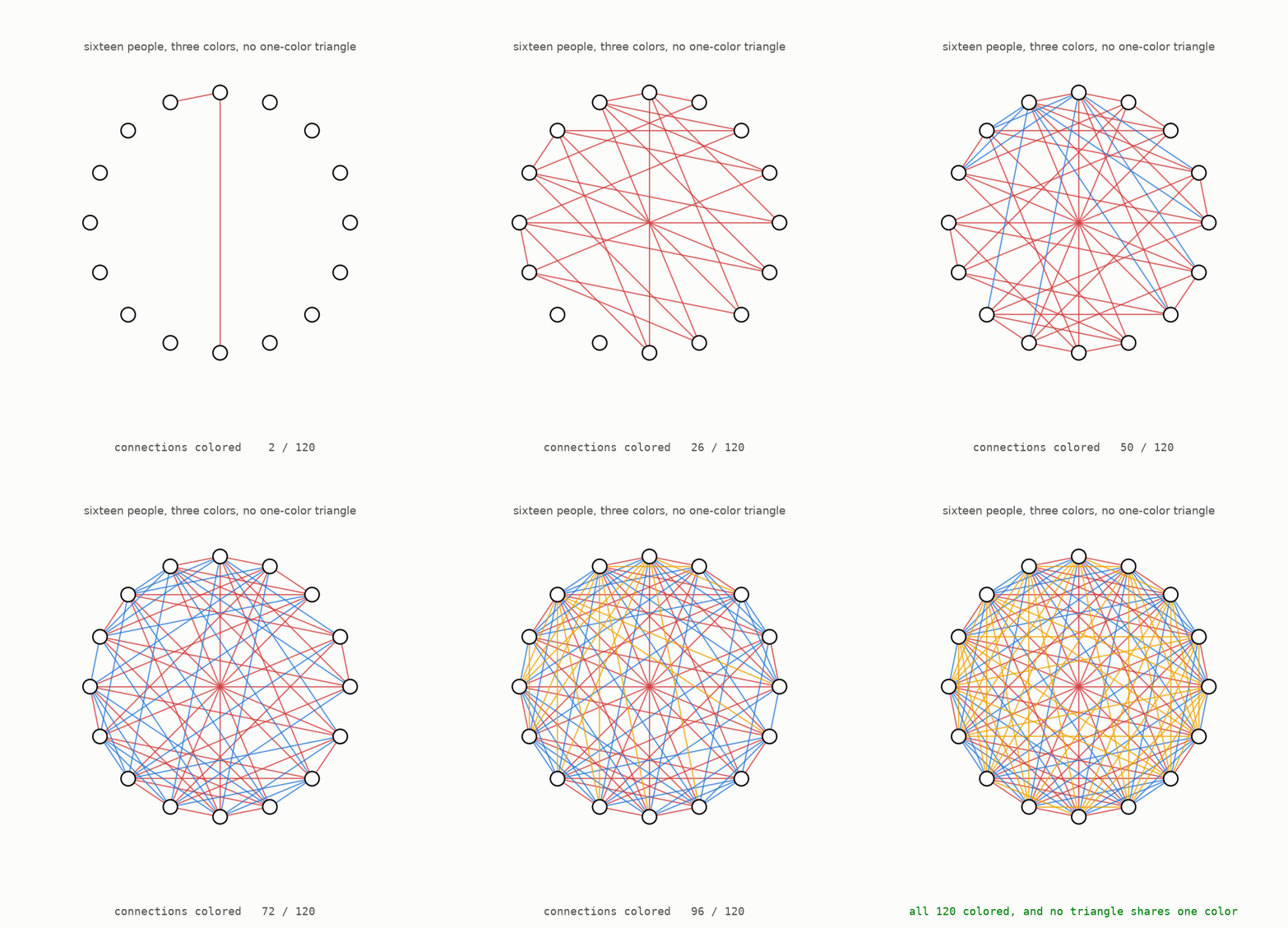
The Triangle Game
Color every connection in a group and you lose the moment three people are joined in a single color. Two colors protect five people, three protect sixteen, and past that nobody knows the exact answers. Erdős put cash on whether the safe group size per color climbs forever or levels off, and the question stood for half a century. In 2026 it was answered: the rate climbs without bound.
13 chapters · 13 simulations embedded in the article, one per chapter, that you can move with your own hands
Prime Numbers and Two Thirds of the Zeros
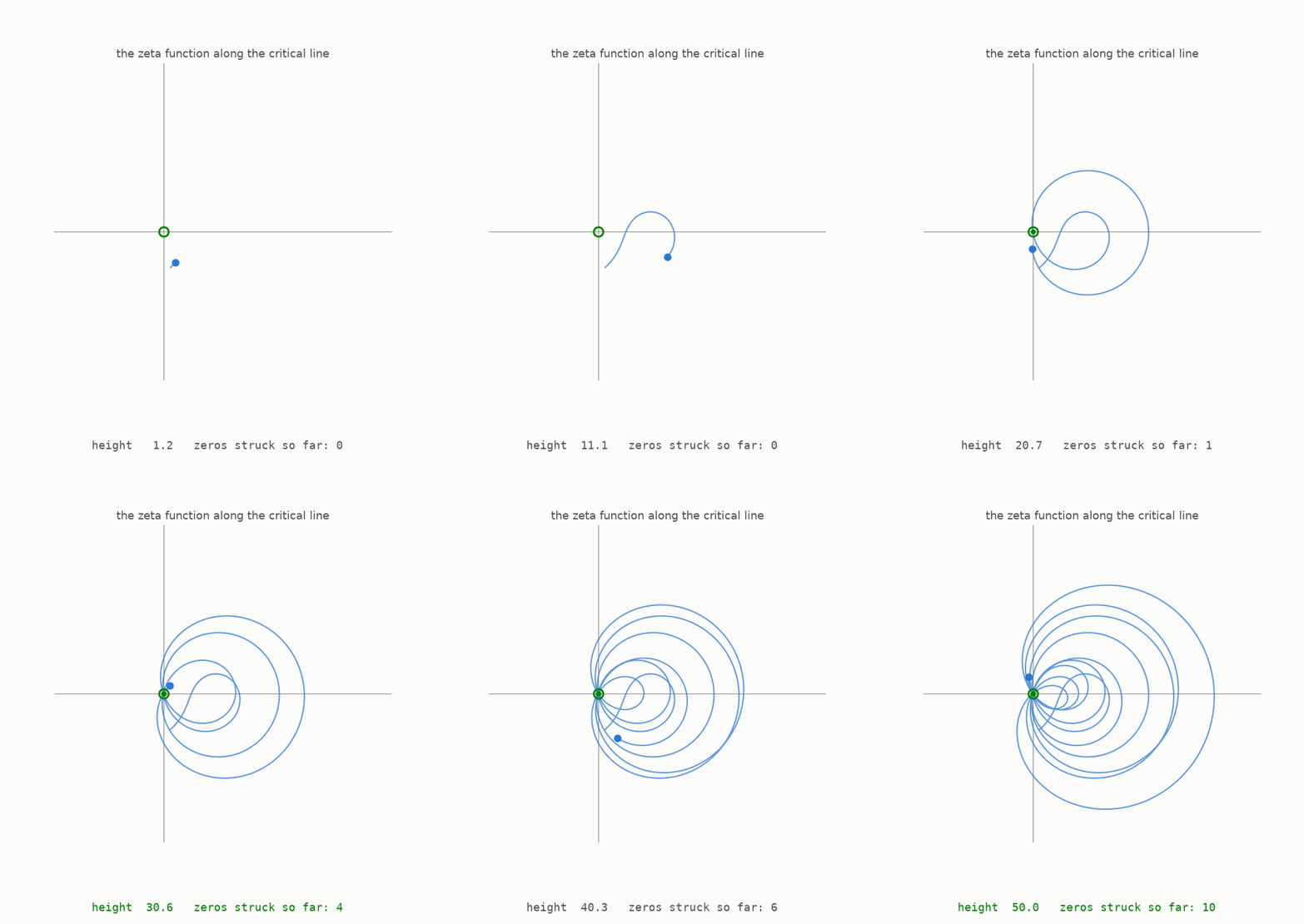
In 1859 Riemann remarked, in passing, that the zeros of one function very likely all sit on one vertical line, and that he had set the question aside. It became the most famous open problem in mathematics. The proportion of zeros proved to sit on the line crept from a third in 1974 to five twelfths in 2020; in August 2026 a paper written by a language model, checked adversarially and formalised in Lean, jumped it to two thirds. The hypothesis itself is exactly as open as before.
13 chapters · 9 simulations embedded in the article that you can move with your own hands
Condensed Mathematics
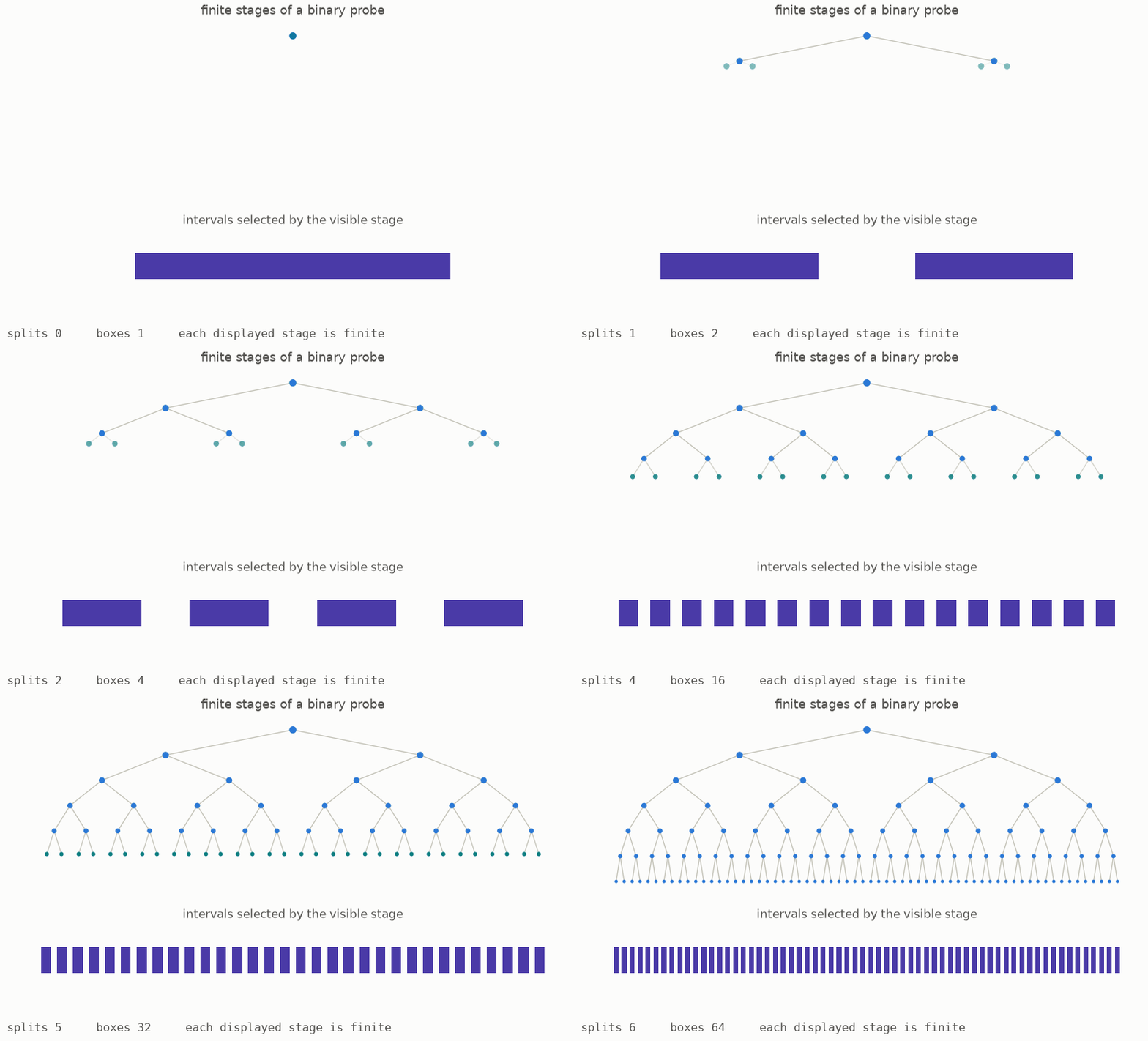
A set with a distance on it is two structures badly glued together, and the glue fails in a way that breaks ordinary algebra: there are maps with nothing missing at either end which are still not the same thing. Scholze and Clausen's repair is to stop describing a shape by its points and start describing it by what it says to probes. Subtraction starts working, infinite sums get a home, and a duality theorem that used to be built by hand becomes a single adjoint.
3 parts · 27 chapters · 27 simulations embedded in the articles, one per chapter · and a game that makes you discover the whole thing from nothing, in eight worlds
The ethos
Distrust, and verify. The tone is friendly, but the claims are not. Every topic
re-checks its own mathematics from scratch, in exact arithmetic, on your machine,
not on anyone's authority. Clone the repo and run make test.