Condensed Mathematics
A step-by-step introduction for readers who are new to the subject. Each chapter explains one idea in plain language and includes an activity that lets you change the mathematical example.
Condensed mathematics describes a space by looking at every continuous map from a profinite probe into it. A probe is built from finite stages, so its basic behavior can be explored through concrete pictures. This description repairs some problems in topological algebra and leads to precise ways of handling infinite sums, rings, and geometry.
The guide follows Peter Scholze's Lectures on Condensed Mathematics, which present joint work with Dustin Clausen. Begin with part one and read the three parts in order. Each part assumes only the ideas explained in the earlier parts.
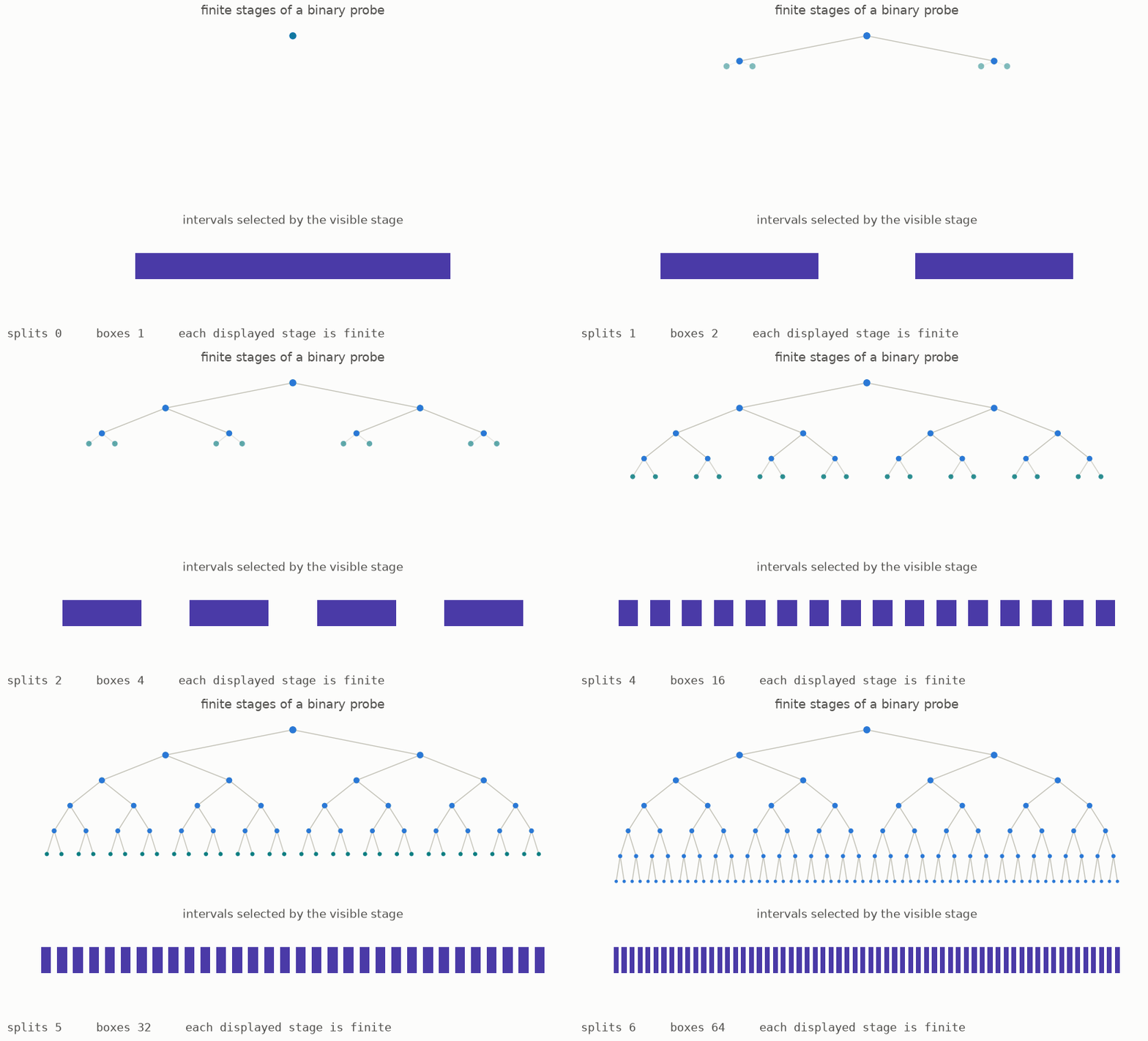
Understanding Spaces Through Probes
Learn how finite branching probes record closeness, why points alone miss important information, and how condensed sets repair kernels and cokernels without losing familiar spaces.
8 chapters · 8 simulations embedded in the article
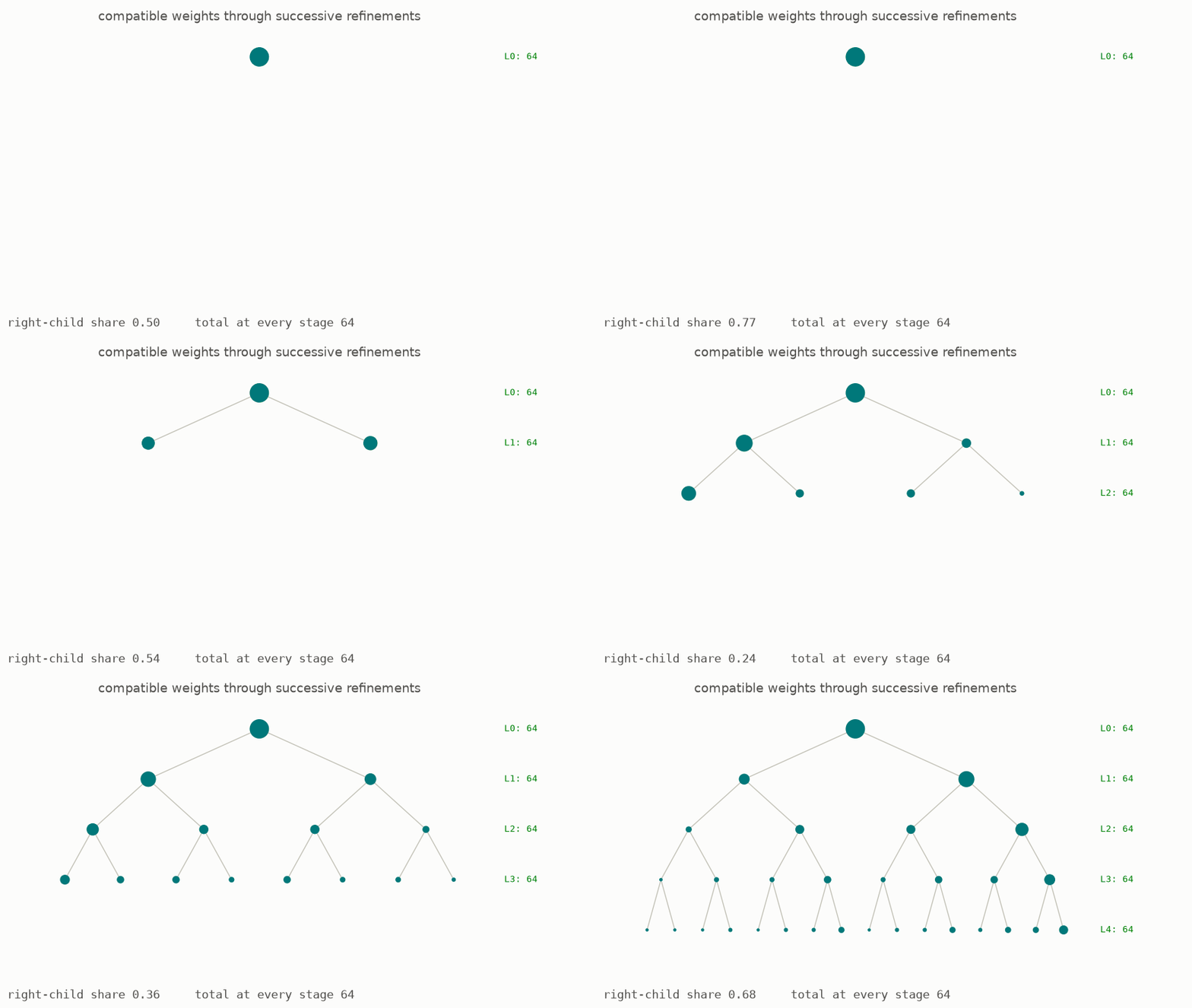
Giving Infinite Sums a Meaning
Use compatible weights on finite probe stages to define solid groups. Then see how these groups handle infinite sums and why derived solidification recovers ordinary homology.
8 chapters · 8 simulations embedded in the article
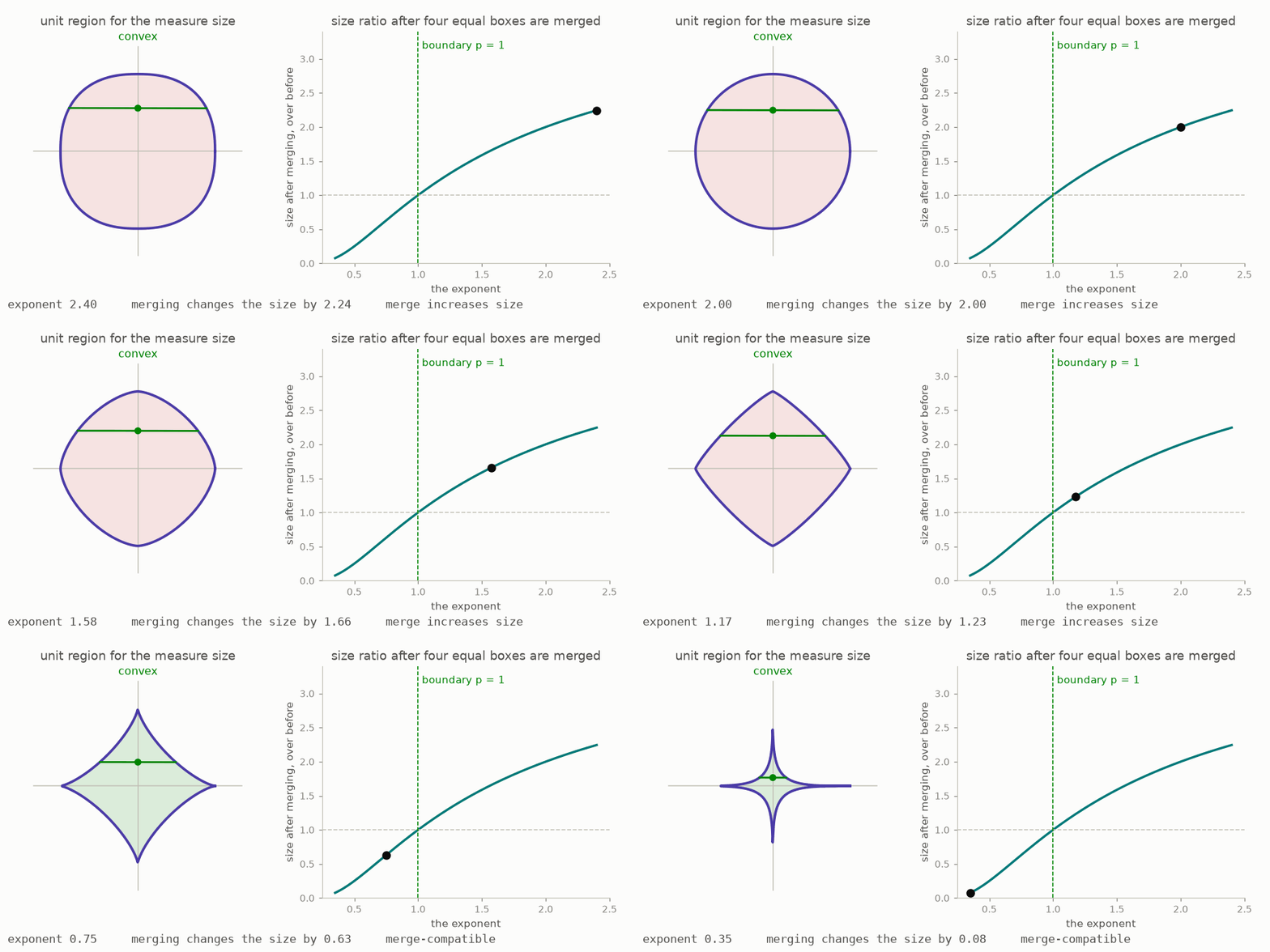
Measure Rules for Rings and Geometry
Give each ring a measure rule suited to its own notion of convergence. This leads from real and p-adic measures to boundary functions, compact support, the six operations, and duality.
8 chapters · 8 simulations embedded in the article
Learn through the game
The three parts above explain the subject chapter by chapter. The game teaches the same ideas through eight worlds and assumes no previous mathematics. Each idea begins with a plain explanation. The game then asks you to make a prediction, run an experiment, and finally learn the standard name and notation.
What the code checks
A program cannot prove the category-level theorems in the lectures. It can check
the finite examples used to explain them. The tests build probes from finite sets,
verify compatible integer measures, calculate homology with Smith normal form, and
check the sizes and truncation counts shown in the activities. Every chapter says
which facts are calculated here and which theorems are quoted. The full list is in
notes/research-content.md.